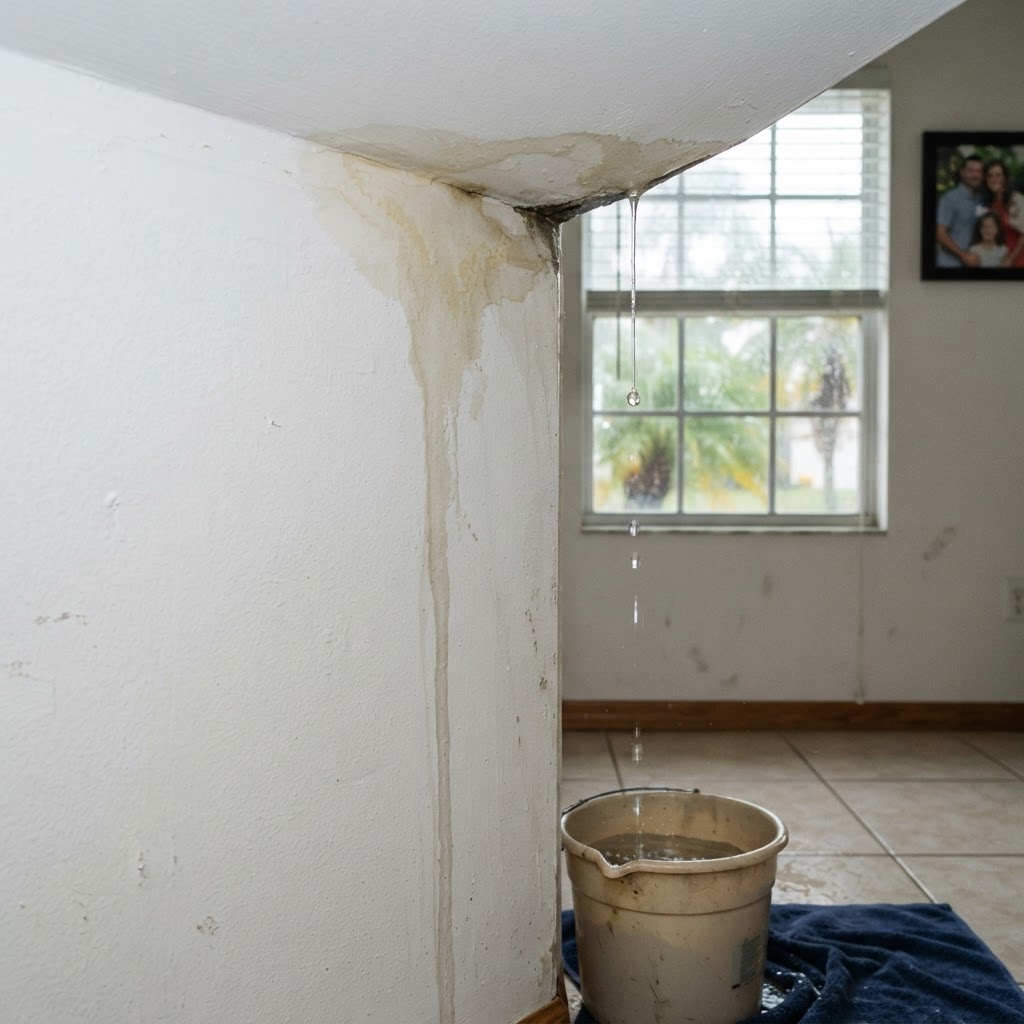
5 Ways Rainwater Sneaks Into Southwest Florida Homes (And Causes Mold)
Daily rainy-season downpours find hidden paths into Florida homes. Here are the five most common ways rainwater intrudes in Cape Coral and Fort Myers — and how each one leads to mold if left unchecked.
Why Rainy-Season Intrusion Is a Mold Problem
A single afternoon thunderstorm can dump an inch of rain on a Cape Coral roof in 30 minutes. Multiply that across a six-month rainy season and even small weaknesses in a home's exterior become recurring moisture sources — exactly the kind mold needs to take hold.
Mold can begin colonizing a damp building material in as little as 24 to 48 hours. The danger is that most rainwater intrusion is invisible: water enters through a gap, travels inside a wall or attic cavity, and feeds hidden growth long before any stain appears on the interior. By the time you smell it, the colony is established.
Here are the five pathways we see most often in Cape Coral, Fort Myers, and across Southwest Florida — and what to do about each.
1. Roof Penetrations and Flashing
Flashing around plumbing vents, skylights, chimneys, and HVAC penetrations is the most common roof leak source. During a wind-driven downpour, even slightly lifted flashing channels water into the attic, where it soaks insulation and the back of the drywall ceiling.
What to watch for: damp or compressed insulation in the attic, water stains on the roof deck around penetrations, or a ceiling stain that appears after a storm.
What to do: inspect flashing from the attic after heavy rain, and re-seal or replace any compromised flashing before the next storm. Any ceiling drywall that has been wet more than 48 hours should be assessed for hidden growth.
2. Windows and Doors
Weatherstripping and sealant degrade in Florida's heat and UV. A window that sealed fine in March can allow wind-driven rain into the wall cavity by August. Water enters behind the trim, runs down inside the wall, and collects at the bottom plate — a perfect hidden mold environment.
What to watch for: soft or cracked caulking around window frames, water on the sill after rain, or peeling paint on the wall below a window.
What to do: re-caulk window and door exteriors each spring, and replace flattened weatherstripping. If the wall below a window feels soft or shows discoloration, a mold inspection can confirm whether growth has started inside the cavity.
3. Slab and Foundation Wicking
Many Southwest Florida homes are slab-on-grade. During repeated heavy rains, water can pool against the foundation and wick upward through the concrete or enter through tiny slab cracks. This shows up as darkening at the base of exterior walls, peeling baseboard, or a persistent musty smell near the floor.
What to watch for: efflorescence (white mineral deposits) on the slab, damp carpet near exterior walls, or baseboards pulling away from the wall.
What to do: ensure grading directs water away from the foundation and that gutters discharge well clear of the slab. For ongoing wicking, a moisture assessment determines whether a vapor barrier or slab sealant is needed.
4. Saturated Exterior Walls
Stucco and siding that stay wet for days after repeated storms wick moisture into the wall cavity. Once inside, there is little airflow to dry it, and mold colonizes the back of the drywall and the wall studs. This is especially common on walls with limited sun exposure or poor drainage.
What to watch for: dark streaks on exterior stucco, a musty odor on the interior side of an exterior wall, or bubbling paint indoors.
What to do: ensure exterior finishes are intact and that irrigation and downspouts are not wetting the walls. If interior signs appear, professional water damage restoration can open, dry, and treat the cavity before growth spreads.
5. HVAC Condensate Backups
Not strictly rainwater, but rainy-season related: when ACs run nonstop, a clogged condensate drain line backs water up into the drain pan and overflows into ceilings, closets, or the crawlspace. This is one of the most common "hidden" water sources we find behind mold growth in late summer.
What to watch for: water staining near an indoor air handler, a musty smell when the AC starts, or a pan that is not draining.
What to do: clear the condensate line at the start of the season and after any storm, and schedule annual air duct cleaning and coil maintenance so the system dehumidifies properly.
Act Fast — Mold Starts in 48 Hours
Any of these pathways can start a mold problem within two days of the water entering. The key is to dry the affected material within 24–48 hours and to confirm the cavity is truly dry before assuming the risk has passed. For storm-related events, our storm damage restoration team handles water extraction, drying, and moisture verification as a single coordinated response.
Pairing fast drying with the preventive habits in our mold prevention guide is the most effective way to keep rainy-season rain outside — where it belongs.
Suspect rainwater intrusion or hidden mold? Call 911 Mold Medic at (844) 393-2902 for a free inspection. Our IICRC-certified team serves Cape Coral, Fort Myers, Naples, and all of Lee and Collier Counties with 24/7 emergency response.
Related Services
Need Professional Mold Removal in Cape Coral?
Our IICRC certified mold remediation experts are available 24/7 for inspections, removal, and prevention throughout Cape Coral, Fort Myers, and all of Lee County.

