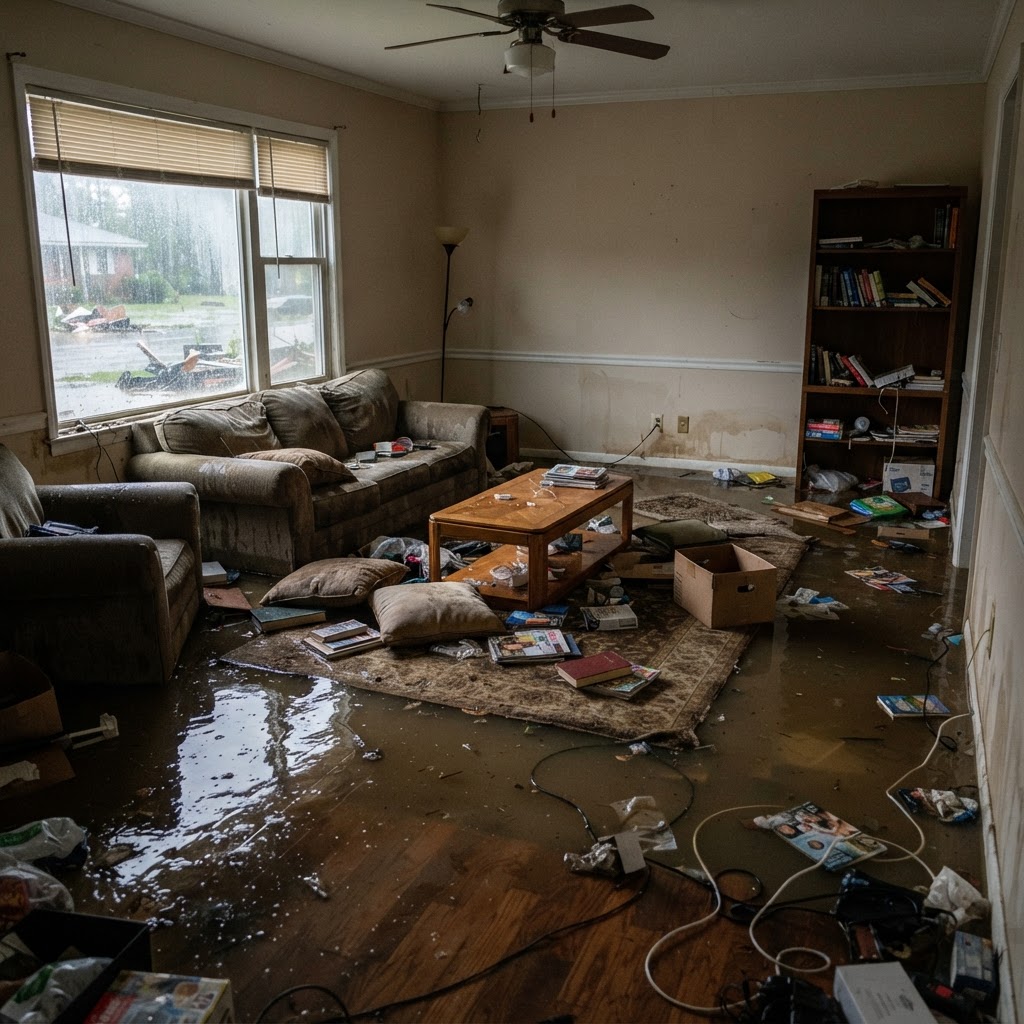
How Fast Does Mold Grow After a Hurricane in Cape Coral? A Timeline Every Homeowner Should Know
After a hurricane hits Cape Coral, the clock is ticking on mold growth. Learn the exact timeline of mold colonization and what to do in the first 72 hours.
How Fast Does Mold Grow After a Hurricane in Cape Coral? A Timeline Every Homeowner Should Know
Cape Coral sits directly in Florida's hurricane zone. After a storm passes, most homeowners focus on visible damage — fallen trees, missing shingles, broken screens. But the most dangerous threat often starts invisible: mold.
In Southwest Florida's warm, humid climate, mold after a hurricane doesn't take days to appear. It takes hours. Understanding the timeline can be the difference between a manageable cleanup and a full-scale remediation project costing tens of thousands of dollars.
The Hurricane Mold Timeline
0–24 Hours: The Invisible Window
Immediately after water intrusion, there are no visible signs of mold. But the process has already begun. Mold spores — which exist naturally in Florida's outdoor air — are settling on wet surfaces throughout your home.
At this stage, the water is the enemy. Every hour that drywall, insulation, carpet, and wood framing remain wet, mold spores are germinating. In Cape Coral's typical post-storm conditions (85°F + 80% humidity), this germination happens faster than in almost any other U.S. market.
What you should do in this window:
- Contact a water damage restoration company immediately
- If safe, begin removing standing water with wet vacs or pumps
- Open windows and doors if outdoor humidity has dropped
- Remove wet rugs, furniture, and belongings from affected rooms
- Take photos and video of all damage for insurance
24–48 Hours: The Tipping Point
By the 24-hour mark, mold spores that landed on wet organic materials (drywall paper, wood, fabric) have begun to colonize. You won't see it yet, but beneath the surface, hyphae — the root-like structures of mold — are penetrating porous materials.
At this point, a musty odor may become noticeable. This is the metabolic byproduct of active mold growth. If you smell it, mold is already growing even if you can't see it.
What you should do in this window:
- Industrial dehumidifiers and air movers should be running by now
- Cut open wet drywall to check the wall cavity (wet insulation must be removed)
- Remove baseboards to allow wall cavities to dry
- Begin demolition of visibly saturated materials
- Document everything for insurance
48–72 Hours: Visible Growth Begins
Between 48 and 72 hours after water exposure, mold becomes visible to the naked eye. In Cape Coral's climate, you'll typically see the first colonies as greenish, gray, or black spots on drywall, the back of wallpaper, or on wet wood framing.
Common early-appearing species after hurricanes include:
- Aspergillus — greenish-yellow, grows on drywall and wood
- Penicillium — blue-green, thrives on wet insulation and fabrics
- Cladosporium — dark green to black, common on painted surfaces
These are the faster-growing species. Stachybotrys chartarum (black mold) typically takes longer — 7–14 days — but once established, it's the most hazardous.
What you should do in this window:
- Professional remediation should be underway
- Containment barriers should be installed to prevent spore spread
- HEPA filtration (negative air machines) should be running
- Wet materials that can't be dried should be removed and disposed of
72 Hours–7 Days: Rapid Colonization
After 72 hours, mold growth accelerates exponentially. Colonies that were barely visible expand across surfaces. Spores are released into the air by the millions, settling throughout the home via the HVAC system and natural air currents.
At this stage, mold has likely penetrated beyond the surface into wall cavities, under flooring, and into ceiling spaces. Surface cleaning alone will not resolve the problem — you need professional remediation with containment, negative air pressure, and removal of contaminated materials.
7–14 Days: Structural Damage Risk
After a week of unchecked growth, mold begins to compromise structural materials. Drywall loses its integrity. Wood framing may show signs of decay. The HVAC system is likely contaminated, spreading spores to every room in the house.
At this point, remediation costs increase dramatically. What could have been a $2,000–$5,000 cleanup in the first 48 hours can become a $15,000–$30,000+ project requiring extensive demolition, HVAC cleaning, and reconstruction.
Why Cape Coral Is Especially Vulnerable
Canal Proximity
Cape Coral has over 400 miles of canals — more than any other city in the world. Properties near canals experience higher ambient moisture and greater flood risk during hurricanes. After a storm, canal-adjacent homes dry out more slowly, extending the mold growth window.
Year-Round Heat
Unlike coastal areas further north, Cape Coral's temperatures remain in the 80s–90s for most of hurricane season (June–November). Mold grows fastest between 77°F and 86°F — which is essentially Cape Coral's default indoor temperature without AC.
Widespread AC Outage
After a hurricane, power outages are common. Without air conditioning, indoor humidity quickly rises above 70%, creating ideal mold conditions even in homes that didn't experience direct water intrusion. We've seen mold develop in homes that had no flooding — just days of high humidity from no AC.
What to Do Immediately After a Hurricane
Step 1: Safety First
Do not enter your home until it's been cleared for structural safety and electrical hazards. Wear protective gear (N95 mask, gloves, eye protection) when entering any water-damaged area.
Step 2: Contact Your Insurance
File a claim immediately. Florida policies require you to mitigate damage — meaning you must take action to prevent further damage. Document the initial conditions, then begin emergency mitigation.
Step 3: Start Water Removal
Begin extracting standing water immediately. Every hour counts. Use wet vacs, pumps, or call a professional water extraction service. The faster water is removed, the slower mold develops.
Step 4: Begin Drying
Once standing water is removed, the drying process begins. This requires:
- Industrial dehumidifiers (not consumer-grade units)
- High-velocity air movers
- Moisture meters to track progress
- Wall cavity drying systems for wet interior walls
Step 5: Call a Professional
For any water damage beyond a small, contained area, professional remediation is essential. DIY drying methods can't remove moisture from wall cavities, under flooring, or in ceiling spaces. Hidden moisture becomes hidden mold.
911 Mold Medic's Hurricane Response
We're based in Cape Coral and provide 24/7 emergency hurricane response throughout Lee County:
- 60-minute response time for Cape Coral addresses
- Emergency water extraction — industrial pumps and vacuums
- Structural drying — commercial dehumidifiers and air movers
- Thermal imaging moisture detection — finding water behind walls and under floors
- Mold prevention treatment — antimicrobial application on wet materials to inhibit growth
- IICRC S520-compliant remediation — if mold has already developed
- Direct insurance billing — we work with your adjuster and provide full documentation
Don't Wait — Every Hour Matters
If your Cape Coral home experienced water damage from a hurricane or tropical storm, the clock is already ticking on mold growth. What you do in the first 24–48 hours determines whether you'll face a manageable cleanup or a major remediation project.
Call (844) 393-2902 for 24/7 emergency response. Our Cape Coral-based team can be on-site within 60 minutes to start water extraction and prevent mold before it starts.
Related Services
Need Professional Mold Removal in Cape Coral?
Our IICRC certified mold remediation experts are available 24/7 for inspections, removal, and prevention throughout Cape Coral, Fort Myers, and all of Lee County.

