How Florida's Summer Humidity Feeds Hidden Mold (And How to Stop It)
Southwest Florida's summer humidity keeps indoor moisture above the threshold where mold grows. Learn how humidity drives hidden mold and the practical steps to stop it in your Cape Coral or Fort Myers home.
The Humidity Threshold Every Florida Homeowner Should Know
Mold does not need a flood to grow. It needs sustained moisture, and in Southwest Florida, summer delivers that moisture through the air itself. When indoor relative humidity stays above 60% for more than a day or two, mold begins colonizing surfaces you cannot see — behind drywall, inside ductwork, on HVAC coils, and in closets.
From June through September, outdoor dew points in Cape Coral and Fort Myers routinely sit in the mid-70s. Even a well-sealed, air-conditioned home fights a losing battle against that much airborne moisture if the system is not sized, maintained, and run correctly.
How Humidity Becomes Hidden Mold
Humidity-driven mold follows a predictable pattern. Understanding it helps you catch problems early.
1. Condensation on Cool Surfaces
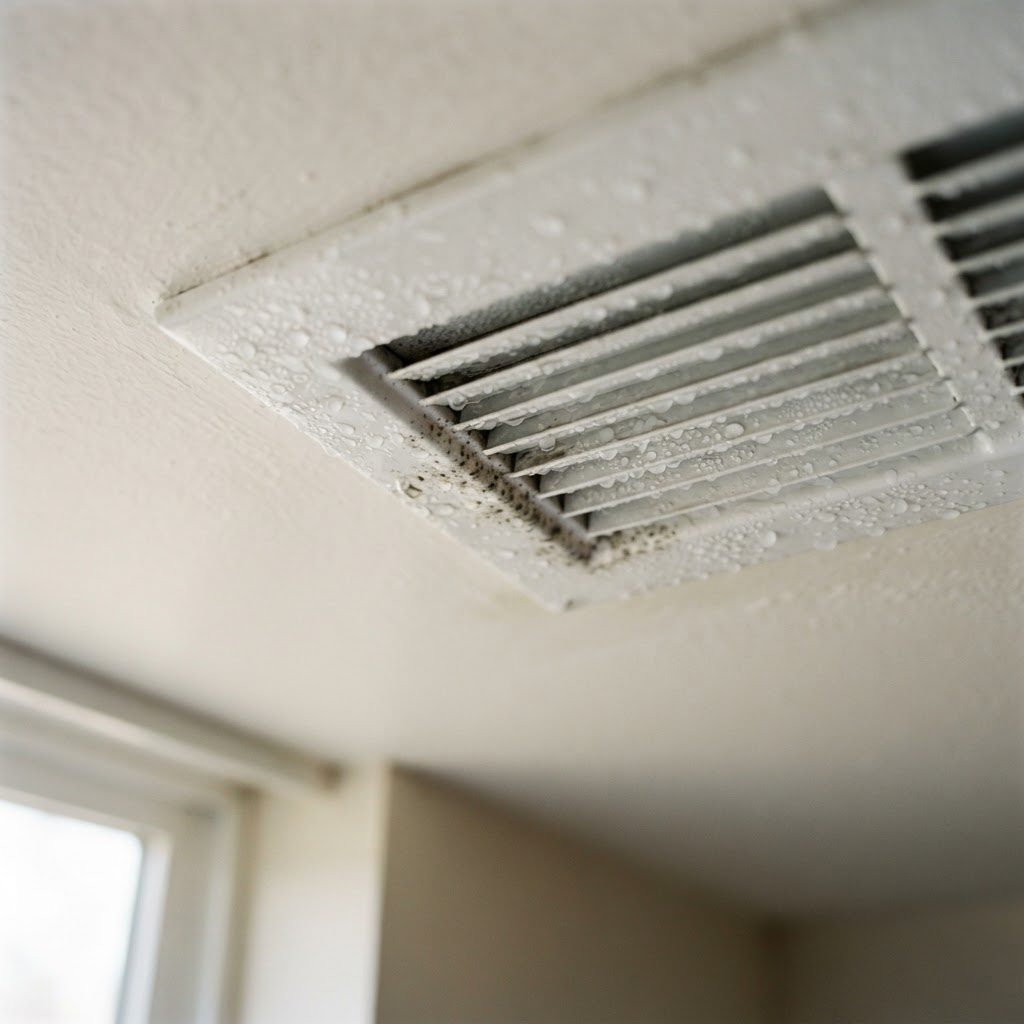
When warm, humid air meets a cool surface, water condenses. In a Florida home, the cool surfaces are air supply vents, exterior walls, window glass, and metal duct components. That thin film of condensation is enough to feed mold. You will often see the first signs as dark speckling around AC vents or a musty smell when the system first kicks on.
2. The HVAC System as a Mold Incubator
Your air conditioner dehumidifies by pulling moisture out of the air and draining it away. But the evaporator coil and drain pan stay damp continuously during summer. If the coil is dirty, the drain is partially clogged, or the filter is overdue, the system stops dehumidifying efficiently — and the damp coil becomes a growth surface. Every cooling cycle then distributes spores through the supply ducts.
An annual air duct cleaning and coil inspection removes the biological load and confirms the system is draining properly.
3. Closets, Cabinets, and Exterior-Wall Cavities
Rooms with poor airflow and exterior walls are the next to suffer. Closets packed with clothing, cabinets under sinks, and the cavities behind furniture pushed against outside walls all trap humid air. Because there is no airflow to dry them, mold grows on clothing, shoes, and the back of drywall long before it is visible.
How to Stop Humidity-Driven Mold
The goal is simple: keep indoor humidity between 40% and 50% and eliminate the damp pockets where mold starts.
Measure First
Buy a digital hygrometer (under $15) and place it in your main living area. Check it morning and evening for a week. If you regularly see readings above 55%, one of the following is usually the cause:
- The AC is oversized and short-cycles (cools fast but never runs long enough to dehumidify)
- The AC is undersized or aging and cannot keep up
- The filter or coil is dirty, reducing airflow and dehumidification
- There is a hidden moisture source — a slab leak, a roof leak, or a plumbing leak
Run the AC Smartly
- Do not set the thermostat above 82°F when you are away. A warm interior absorbs humidity and becomes harder to dry later.
- Use a programmable or smart thermostat to maintain a steady temperature rather than large swings.
- Keep fan setting on "Auto," not "On." Running the fan continuously re-evaporates moisture from the coil and redistributes it.
Add Dehumidification Where the AC Falls Short
In homes where the AC cannot hold humidity below 55% — common in Naples and Bonita Springs lanai conversions and older construction — a whole-house or portable dehumidifier is the most effective fix. Size it to the square footage and drain it continuously so you do not have to empty a bucket.
Improve Airflow in Hidden Spaces
- Pull furniture 2–3 inches off exterior walls.
- Leave closet doors cracked or install louvered doors.
- Run ceiling fans to keep air moving in low-traffic rooms.
When to Get a Professional Assessment
If you have done the above and humidity still reads above 55%, or if you smell mustiness you cannot locate, the moisture source is likely hidden. A professional mold inspection with moisture mapping and air quality testing pinpoints the source — whether it is a slow leak, a slab issue, or an HVAC problem — before it becomes visible growth.
For homes already showing growth, our certified team follows IICRC S520 protocols for safe containment and removal, ending with independent post-remediation clearance testing.
Humidity Control Is Mold Prevention
In Southwest Florida, managing humidity is the single most effective thing you can do to prevent mold. Pair it with the year-round habits in our mold prevention guide and your home stays cleaner, drier, and healthier through every summer.
Concerned about humidity and hidden mold? Call 911 Mold Medic at (844) 393-2902 for a free inspection. Our IICRC-certified team serves Cape Coral, Fort Myers, Naples, and all of Lee and Collier Counties.
Related Services
Need Professional Mold Removal in Cape Coral?
Our IICRC certified mold remediation experts are available 24/7 for inspections, removal, and prevention throughout Cape Coral, Fort Myers, and all of Lee County.

