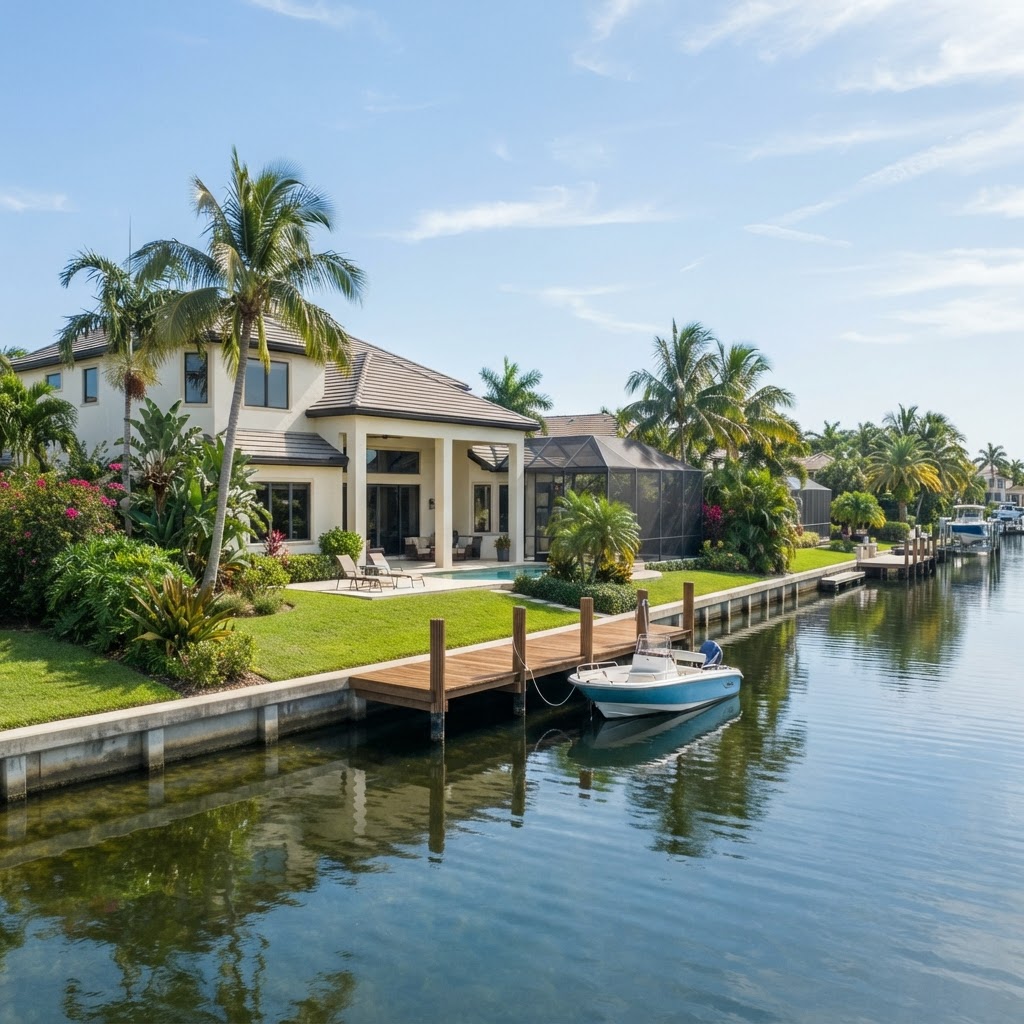
Canal-Front Mold Prevention: Air Quality Tips for SE Cape Coral Waterfront Homes
SE Cape Coral's dense canal network raises ambient humidity by up to 15%. Learn practical mold prevention and air quality strategies for waterfront homes along Cape Coral Parkway.
Canal-Front Mold Prevention: Air Quality Tips for SE Cape Coral Waterfront Homes
Living on a canal in SE Cape Coral — whether along Cape Coral Parkway, near the Yacht Club, or out toward Tarpon Point — is one of the best lifestyles Southwest Florida offers. But that same waterfront setting makes your home one of the highest mold-risk properties in all of Lee County.
SE Cape Coral has the highest concentration of canal-front homes in the city. Saltwater canals raise ambient humidity by up to 15% within 100 feet of the water. Add Cape Coral's year-round heat, and you have conditions where mold grows faster, spreads further, and returns more stubbornly than anywhere else in the city.
The good news: with the right prevention strategy, you can protect your home, your air quality, and your property value. Here's what every SE Cape Coral waterfront homeowner should know.
Why Canal-Front Homes Are Mold Magnets
1. Persistent Ambient Humidity
Cape Coral already averages 75–85% outdoor relative humidity — well above the 60% threshold where mold begins growing. Canal-front homes in SE Cape Coral push that even higher. Saltwater evaporation from canals creates a micro-humidity zone that affects homes within roughly 100 feet of the waterline.
This means even on dry, sunny days, your home's exterior walls, windows, and door frames are exposed to moisture-laden air. Without proper sealing and ventilation, that moisture migrates indoors.
2. Seawall and Foundation Moisture
SE Cape Coral's canal-front properties frequently experience seawall-related moisture intrusion. Over time, seawalls develop cracks or weep holes that allow water to migrate into the soil behind them — right up against your home's foundation. This drives moisture into slab foundations and lower wall cavities where mold thrives unseen.
Studies of Cape Coral waterfront properties show that seawall failures contribute to foundation moisture in up to 30% of waterfront homes.
3. Storm Surge Exposure
SE Cape Coral's location makes it particularly vulnerable to hurricane storm surge. When saltwater pushes into canals during a storm, it can overtop seawalls and flood ground-level areas. Saltwater intrusion is especially dangerous because it not only fuels mold growth but also accelerates corrosion of building materials.
4. HVAC Systems Working Overtime
Waterfront homes run their AC systems harder to combat humidity. This means more condensation, more strain on the system, and a higher likelihood of mold colonization inside the HVAC unit and ductwork. In canal-front homes, we frequently find mold growing on evaporator coils and inside ductwork because the system is constantly dehumidifying salt-laden air.
The Indoor Air Quality Connection
Mold doesn't just damage your home — it directly impacts the air you breathe. Canal-front homes in SE Cape Coral are particularly susceptible to indoor air quality problems because:
- Mold spores circulate through HVAC systems — every time your AC runs, it can distribute spores from a hidden colony throughout your entire home
- Saltwater air carries particulates — microscopic salt crystals enter through ventilation and open doors, settling on surfaces and contributing to respiratory irritation
- High indoor humidity above 60% allows dust mites and mold to thrive simultaneously, compounding allergy symptoms
If you or family members experience unexplained allergies, headaches, fatigue, or respiratory issues that improve when you leave the house, hidden mold is a likely culprit in a canal-front SE Cape Coral home.
7 Mold Prevention Strategies for SE Cape Coral Waterfront Homes
1. Keep Indoor Humidity Between 45–50%
This is the single most important step. Mold cannot grow below 50% relative humidity. Install a whole-home dehumidifier integrated with your HVAC system, and use standalone dehumidifiers in problem areas like garages, lanais, and enclosed porches.
Monitor humidity with hygrometers placed in multiple rooms — not just the living area. Canal-front homes often have dramatically different humidity levels in rooms facing the water versus interior rooms.
2. Inspect Your Seawall Annually
Hire a marine contractor to inspect your seawall every year for cracks, voids, or weep hole blockages. Seawall moisture migration is one of the most common — and least visible — causes of mold in SE Cape Coral waterfront homes.
Signs of seawall trouble include:
- Cracks in your home's slab or tile floors
- Musty smells in ground-level rooms
- Unexplained moisture at the base of exterior walls
- Sinking or settling of pavers near the seawall
3. Schedule Bi-Annual HVAC Mold Inspections
For canal-front homes, once-a-year HVAC inspection isn't enough. Schedule professional HVAC mold inspections every 6 months — ideally in spring (before peak humidity season) and fall (after hurricane season).
Ask your HVAC technician to:
- Inspect and clean evaporator coils
- Check condensate drain lines for blockages
- Examine ductwork interior with a borescope camera
- Replace air filters with MERV 11 or MERV 13 rated filters that capture mold spores
4. Seal Windows and Door Frames
Waterfront homes face constant wind-driven moisture. Re-caulk and weatherstrip all windows and exterior doors annually — especially those facing the canal. Salt air degrades caulking faster than inland homes, so what lasted 5 years inland may only last 2–3 years on a canal-front property.
5. Install a Whole-Home Air Purifier
For SE Cape Coral canal-front homes, a whole-home air purification system with UV-C light and HEPA filtration is one of the best investments you can make. UV-C light kills mold spores and bacteria at the HVAC coil before they can circulate, while HEPA filtration captures airborne spores, salt particulates, and allergens.
6. Manage Outdoor Living Areas
Pool cages, lanais, and outdoor kitchens are extension of your living space in SE Cape Coral — but they're also mold havens. The humid microclimate between your home's walls and your pool cage creates ideal conditions for mold on screens, framing, and adjacent exterior walls.
- Clean pool cage screens quarterly with a mild bleach solution
- Keep the gap between your home and lanai well-ventilated
- Treat exterior walls adjacent to outdoor living areas with antimicrobial coating
- Don't store items against exterior walls in enclosed lanais
7. Have a Storm Surge Mold Plan
Before hurricane season, know exactly what you'll do if saltwater breaches your property:
- Have 911 Mold Medic's number saved: (844) 393-2902
- Know how to shut off your HVAC system to prevent spreading contaminated air
- Have N95 masks, gloves, and eye protection ready
- Take photos of all areas before you evacuate for before/after documentation
- Understand that mold can begin within 24 hours of saltwater intrusion — do not wait to call for help
Signs Your Canal-Front Home May Already Have Mold
Don't wait for visible mold — by the time you see it, the problem is usually extensive. Watch for these early warning signs:
- Musty odors — especially in ground-level rooms, bathrooms, or near the HVAC return
- Discoloration on baseboards or lower walls — yellowing, dark spots, or bubbling paint
- Increased allergy symptoms — sneezing, coughing, or itchy eyes that worsen indoors
- Higher than normal humidity readings — if your hygrometer reads above 55% consistently despite AC running
- Visible mold on HVAC vents — dark spots around register covers or inside the return air box
- Warped or soft drywall — especially near the floor in rooms facing the canal
911 Mold Medic: Your SE Cape Coral Waterfront Specialists
We've been serving SE Cape Coral's canal-front communities since 2015. We understand the unique mold challenges of waterfront living — from saltwater-accelerated growth to seawall moisture to luxury finishes that require careful handling.
Our canal-front specialized services include:
- Saltwater-accelerated mold remediation using IICRC S520 protocols
- Seawall moisture and mold assessment with thermal imaging
- HVAC duct cleaning and mold treatment
- Storm surge mold recovery and insurance documentation
- Whole-home air quality testing
We respond to SE Cape Coral addresses in under 45 minutes, 24/7. Whether you need a preventative inspection or emergency mold removal, call (844) 393-2902 — your local waterfront mold experts are standing by.
Related Services
Need Professional Mold Removal in Cape Coral?
Our IICRC certified mold remediation experts are available 24/7 for inspections, removal, and prevention throughout Cape Coral, Fort Myers, and all of Lee County.

