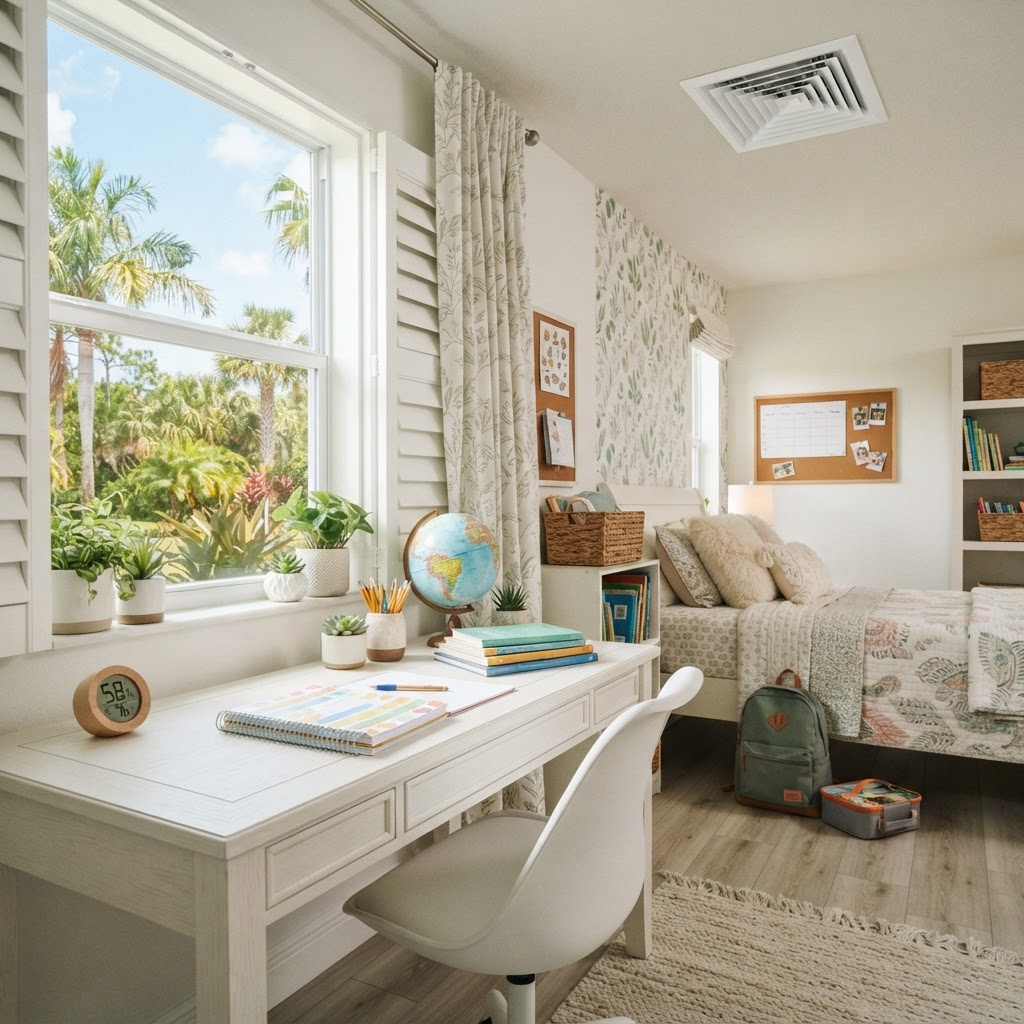
Back-to-School Indoor Air Quality: Hidden Mold Risks in Florida Homes
As Cape Coral and Fort Myers kids head back to class, sealed-up homes and overworked HVAC systems can spike indoor mold and allergens. Here's how to protect your family's air this school year.
Why Back-to-School Season Affects Your Home's Air
Late August marks the start of the school year across Lee and Collier Counties, and while families focus on backpacks and bus schedules, something less visible is changing inside their homes. With children spending more hours indoors studying and sleeping, windows sealed against the late-summer heat, and HVAC systems running around the clock, indoor air quality (IAQ) becomes a real health factor—and in Southwest Florida, mold is the most common hidden culprit behind poor IAQ.
The Late-Summer IAQ Squeeze
Three forces converge in a Florida home during the back-to-school weeks:
- Sealed homes and reduced ventilation. To keep cooling costs down, homes are buttoned up tight. Fresh air exchange drops, and any pollutants or spores already indoors stay trapped.
- Peak HVAC runtime. Air conditioners run nearly continuously in August and September. A system with even minor mold growth on coils or in ductwork will distribute spores to every room.
- High outdoor humidity. Even with the AC on, indoor relative humidity can creep above 60%—the threshold above which mold actively grows on surfaces and in building cavities.
How Hidden Mold Affects Students and Families
Children are among the most sensitive to mold exposure. Common symptoms that parents often mistake for "back-to-school colds" include:
- Persistent congestion or runny nose that worsens at home
- Morning headaches or grogginess
- Dry cough, especially at night
- Worsening asthma or allergy symptoms
- Difficulty concentrating or fatigue
If these symptoms ease when a child is away from home—on a weekend trip, for example—indoor mold or poor IAQ is a likely contributor.
Where Mold Hides During the School Year
The mold that disrupts indoor air quality is rarely the visible kind. In a sealed, air-conditioned Florida home, the most common hidden reservoirs are:
- HVAC evaporator coils and drain pans — A damp, dark coil is an ideal growth surface, and every cooling cycle pushes spores into the supply air.
- Air ducts and blower compartments — Dust and condensation combine here; an unmaintained system can harbor growth for years.
- Behind bedroom furniture — Dressers and headboards pushed against exterior walls create cold surfaces where condensation forms and mold colonizes the drywall.
- Closets, especially those with exterior walls — Poor airflow plus cool surfaces equals hidden growth on shoes, clothing, and walls.
- Window sills and frames — Condensation from cooled interior air meeting warm humid exterior air feeds growth in seal gaps.
A Practical Back-to-School IAQ Checklist
You can meaningfully improve your home's air before the first report card with a few targeted steps:
- Change your HVAC filter with a pleated MERV 11–13 filter, and set a reminder to change it monthly through October.
- Keep indoor humidity between 40–50% using a digital hygrometer; if your AC can't keep up, a standalone dehumidifier is a smart investment.
- Pull furniture 2–3 inches off exterior walls in bedrooms to allow airflow and prevent condensation.
- Leave closet doors cracked or install louvered doors to improve circulation.
- Wipe condensation from window sills each morning during humid stretches.
- Schedule an HVAC and air duct cleaning to confirm coils and drain lines are clean and the system is dehumidifying properly.
When to Call a Professional
If anyone in the household has persistent symptoms, if you detect a musty odor you cannot locate, or if your hygrometer readings stay above 60% despite your AC running normally, it is time for a professional assessment. DIY cleaning of visible growth does not address the airborne spore load or the hidden source, and bleach-based treatments can actually worsen the problem by adding moisture. A professional mold inspection and air quality testing will pinpoint the source.
At 911 Mold Medic, our IICRC-certified inspectors use thermal imaging, moisture mapping, and air sampling to find the hidden sources that affect your family's air. We follow IICRC S520 protocols for safe containment and removal, and every project ends with independent post-remediation clearance testing.
Start the School Year With Cleaner Air
Good indoor air quality supports better sleep, clearer thinking, and fewer sick days—for students and parents alike. As the 2026 school year begins across Cape Coral, Fort Myers, Naples, Lehigh Acres, and Marco Island, take an hour to run through the checklist above. For year-round protection, review our mold prevention guide.
Concerned about hidden mold or your home's air quality? Call 911 Mold Medic at (844) 393-2902 for a free inspection. Our certified team serves Lee and Collier Counties with 24/7 emergency response.
Related Services
Need Professional Mold Removal in Cape Coral?
Our IICRC certified mold remediation experts are available 24/7 for inspections, removal, and prevention throughout Cape Coral, Fort Myers, and all of Lee County.

